If you’re reading this, chances are you’re either in the market for a mobile tunnel kiln, or you already own one and are staring down the headache of figuring out what heating system makes sense for your operation. Let me cut the crap—this isn’t a one-size-fits-all gig. I’ve spent over a decade as a mobile tunnel kiln supplier, so I’ve talked to potters, tile makers, brick producers, even small-scale refractory manufacturers who’ve burned themselves (literally and figuratively) by picking the wrong heat setup for their setup. Today, we’re breaking this down like we would over a coffee at a trade show—no jargon, no sales fluff, just real stuff that actually matters. Mobile Tunnel Kiln

First off, let’s get on the same page: a mobile tunnel kiln isn’t the big, fixed, brick-and-mortar one you see at a massive tile factory. These are the ones you can tow to different job sites, haul around with a loader, set up in a day or two, perfect for producers who don’t have a permanent facility or who need to process materials on-site to cut shipping costs. That mobility is the whole point—so your heating system can’t be so bulky or power-hungry that it defeats the purpose of moving the kiln.
Let’s start with the big question: what do you actually need the kiln to do? I can’t tell you how many times a customer has said “just hook up a gas line and call it a day” only to realize they can’t get a gas line at their remote job site. Or another guy who went all-electric because he thought it was cleaner, only to hit a power surge that fried his elements mid-burn and ruined $10k worth of clay. Your end product is the first check here. If you’re making high-fire porcelain or refractory bricks that need consistent, sustained heat over 24+ hours, that’s different from low-fire earthenware or quick-dry cement blocks that only need 8 hours at a lower temp. Got that? Match the heat demand to your source, not the other way around.
Next, let’s talk about the most common heating options, and which ones work (and which ones suck) for mobile kilns. Let’s go one by one, no sales pitch—just what I’ve seen work.
First up: natural gas or propane (LPG). This is the old workhorse, and for good reason. Most job sites have access to a gas line, or you can rent portable LPG tanks super easily. The heat output is consistent, you can tweak the temp in real time without waiting for elements to heat up or cool down, and for kilns that need temps over 2,300°F, gas is pretty much non-negotiable. But here’s the catch for mobile setups: gas burners need proper venting, and if you’re moving the kiln around a lot, you’ve got to make sure your lines are secured so they don’t leak. I had a customer a couple years back who skipped securing his gas lines when towing the kiln to a new site. By the time he parked it, a line had rubbed through, and his first burn had to be a full safety check—cost him three days of production. Also, if you’re in a super remote area, LPG can get pricey, and you might have to arrange for bulk delivery, which isn’t always quick. So gas is great if you’ve got consistent access to fuel, and you need high temps, but don’t cut corners on securing your lines.
Second: electric heating. This is the newbie on the block, but it’s blowing up for small to mid-sized mobile kilns. Why? No fumes, no fuel tanks, super easy to set up—just plug it into a standard 220V outlet if you’re on grid power, or use a portable generator if you’re off-grid. Elements are durable, last longer than gas burners if maintained right, and you get super precise temp control, which is perfect for things like pottery or ceramic art that need exact heat cycles. But wait—there’s a huge downside for mobile kilns: power requirements. A kiln that hits 1,800°F can pull 50kW or more, which means if you’re off-grid, your generator has to be massive and heavy, defeating the whole purpose of a mobile kiln. I had a guy last year who got an electric mobile kiln, then bought a 100kW generator to power it—said it weighed more than the kiln, and he couldn’t tow it down dirt roads. Also, if you’re in an area with frequent power outages, even a short blip can ruin a full burn, and backup generators for electric kilns are way more expensive than for gas. So electric is perfect for small operations, low to mid temps, grid power access, and if mobility is still a priority (but not at the cost of a generator that’s half the size of your kiln).
Third: diesel or heavy oil. This is the underdog, and it’s super popular in places where grid power is non-existent and gas is hard to get. Diesel burners are cheap, fuel is easy to find almost anywhere, and they produce a ton of heat for low cost. But let’s be real—they’re messy. They produce fumes, require proper exhaust venting, and if you’re not careful, you can get soot on your product. I once visited a customer who used diesel to fire brick, and the first batch had a gray tint because his venting wasn’t strong enough. Also, diesel burners need more maintenance—cleaning the nozzle every week, changing filters, checking for clogs—something you can’t afford to do when you’re on a job site that’s 5 hours from the nearest shop. So diesel works for high-temp, low-sensitivity products like bricks, but if you’re making something that needs a clean finish, skip it.
Wait, there’s another option that a lot of people don’t talk about: waste heat or biomass. We’ve worked with a few custom clients who process agricultural waste—like rice husks, wood chips, or even spent grain from breweries—and they use that to heat their kiln. It’s super cheap, almost zero waste, and perfect for operations that are near farms or breweries. But it’s only for specific use cases—you can’t haul a ton of rice husks around with your kiln, so you have to process the waste on-site, which adds another layer of setup. Most of our clients don’t go this route, but it’s worth mentioning if you’re looking for a sustainable, low-cost long-term option.
Okay, so you’ve picked your heat source—now what? There are a few more things specific to mobile tunnel kilns that you can’t ignore, because mobility changes everything. First: weight. A gas setup with tanks and burners is way lighter than an electric setup with a huge generator, or a diesel setup with a fuel tank that holds 50 gallons. If you’re towing your kiln with a pickup truck, the total weight (kiln + heat system + fuel) can’t exceed your truck’s towing capacity. I tell every customer to add an extra 10% to the weight of their kiln to account for the heat setup and fuel—trust me, you don’t want to overload your truck and get stuck on a dirt road.
Second: venting. This is huge, and almost everyone gets it wrong with mobile kilns. Fixed kilns have permanent vent stacks that are sized for their heat output, but mobile ones have to be collapsible, right? Because you’re towing the kiln, you can’t have a 10-foot vent stack sticking up that will hit power lines or tree branches. So your vent system has to be easy to extend and retract, and sized properly to pull fumes away without losing too much heat. For gas and diesel, bad venting means carbon monoxide buildup in the kiln, which is a safety hazard, and for electric, bad venting means your elements overheat and die early. I once had a customer who tried to use a flexible duct hose for venting, and it collapsed when the kiln was at full heat—cost him $8k in elements and a full batch of tile. Don’t cut corners on venting.
Third: temp control. This isn’t just about being able to set a number—you need a control system that works on the go. If you’re firing a 24-hour cycle, you can’t sit at the kiln the whole time, so you need a programmable controller that can adjust temp at different stages (like ramp-up, hold, cool-down) without having to be plugged in or connected to grid power. Most modern systems have remote access too—you can check the temp from your phone while you’re at a job site 20 minutes away. I always recommend getting a controller with alarms, too—so if the temp drops or spikes, you get a text or a loud beep, no matter where you are.
Fourth: fuel storage. For mobile setups, you can’t have a 1,000-gallon fuel tank permanently attached to your kiln. It has to be a portable tank, sized for your job. If you’re only firing small batches, a 20-gallon LPG tank works. If you’re firing big brick batches, you need a 250-gallon tank, but make sure it’s DOT-approved for towing, and that you secure it properly so it doesn’t shift when you’re moving the kiln. I had a customer whose LPG tank shifted during a tow, cracked a valve, and he had to call emergency services to evacuate the job site—super avoidable, just use safety straps and secure it tight.
Wait, let’s talk about common mistakes I see all the time, because this is where most people mess up. First: under-sizing their heat system. A lot of customers pick a kiln that’s slightly too small for their production, then try to cram more product in, and end up needing more heat than the system can provide. That leads to uneven firing, cold spots in the kiln, wasted material, and lost time. I always tell people to go 10-15% bigger on their heat system than they think they need—better to have extra capacity than to short-change yourself. Second: ignoring maintenance. Mobile kilns get bounced around, exposed to dust and mud, so your heat system parts (burners, elements, filters) wear out faster than in a fixed kiln. I recommend doing a full check before every tow—tighten lines, clean burners, test the controller—so you don’t have a breakdown mid-burn. Third: not factoring in your location. If you’re working in a cold climate, your fuel will take longer to warm up, and your kiln will lose more heat to the air, so you need a heat system that can compensate for that. If you’re working in a dry, windy area, venting is even more important, because wind can pull fumes back into the kiln.
Let’s wrap this up with a quick example, to make it real. Let’s say you’re a small brick producer in Ohio, you need to tow your kiln to different construction sites to fire bricks on-site, you make standard red brick that needs to hit 1,800°F, and you have access to LPG at most sites. What do you pick? A propane gas system, mid-sized, with a collapsible vent stack, a 250-gallon portable tank, and a programmable controller. That works because you get the high temp you need, LPG is easy to find, the setup is light enough to tow, and venting is simple. Now, if you’re a pottery artist in Arizona, making high-fire porcelain, working out of a studio, not towing the kiln super far, and you have grid power? Go electric, small system, no big generator needed, precise temp control, easy to set up. And if you’re a tile producer in rural Texas, way out in the country, no grid power, and you process your own clay on-site? Diesel system, with a bulk fuel tank, and a good maintenance schedule.
At the end of the day, choosing the right heating system for your mobile tunnel kiln comes down to three things: what you’re making, where you’re working, and how often you need to move. There’s no “best” system, only the one that fits your specific operation. If you’re still confused, or you’ve got a specific setup in mind, feel free to reach out. We’ve helped hundreds of clients pick the right heat system for their mobile kiln, no pressure, just real advice based on years of seeing what works and what doesn’t.
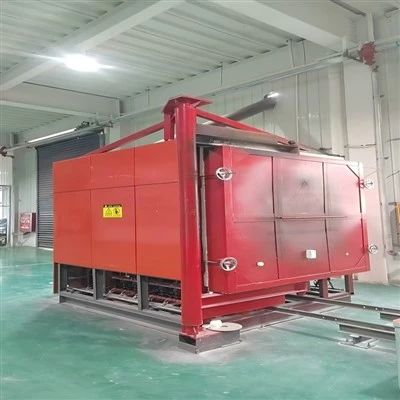
Now, don’t overcomplicate this. Skip the fancy stuff unless you actually need it, don’t cut corners on safety, and always, always test the system before you head to a new job site. Your kiln is an investment, and the heating system is the heart of it—get that right, and you’ll save yourself a ton of headaches, ruined product, and downtime.
Tunnel Kiln References
- International Organization for Standardization. (2019). Mobile tunnel kilns for ceramic products – Design and performance requirements. ISO 21069:2019.
- American Society of Mechanical Engineers. (2021). Safety standards for industrial heating systems. ASME B31.1-2021.
- National Fire Protection Association. (2022). Standard for kiln operations and fuel systems. NFPA 86:2022.
- Portal, B. (2020). Mobile thermal processing: Design considerations for transportable kilns. Journal of Industrial Heating, 87(3), 45-52.
Henan Yaxin Kiln Co., Ltd.
Henan Yaxin Kiln Co., Ltd. is one of the most professional mobile tunnel kiln manufacturers and suppliers in China. With abundant experience, we warmly welcome you to buy high quality mobile tunnel kiln with the latest design from our factory. Good service and punctual delivery are available.
Address: Jixian Industrial Zone, Shangqiu City, Henan Province
E-mail: 1543563178@qq.com
WebSite: https://www.hnyxkiln.com/
