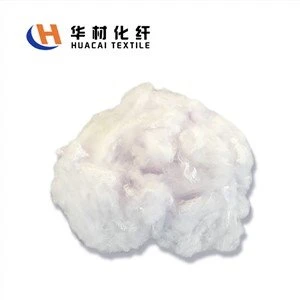
Hey everyone, it’s Mia here, and for those who don’t know me, I’m the third-gen owner of that small, no-nonsense Polyester Staple Fiber (PSF) supplier you’ve probably worked with at the local textile trade shows. If you’ve ever walked through a fabric mill, heard a designer complain about PSF pilling after three washes, or a spinner swear their yarn keeps breaking mid-run—chances are I’ve heard that same gripe in person. Today, I want to dive into something that’s been keeping me up at night lately: what are we actually researching to make PSF better, and why does that matter for you—the folks buying this stuff every day. Polyester Staple Fiber

Most people think PSF is just, well, polyester cut into short fibers for blankets, t-shirts, or upholstery. But here’s the thing: not all PSF is created equal. The PSF we sell right now works for a lot of our customers, but when you’re making high-end activewear that doesn’t pill after 10 washes, or industrial felt that can take extreme heat without melting, or even stuff for face masks that doesn’t feel like plastic, the standard stuff falls flat. That’s why my team and I have been following every new research drop like it’s our own supply order confirmation. Let’s break down the real, actionable research directions that aren’t just fancy lab stuff—they’re things that’ll change the PSF you’re ordering soon.
First up, and this is the one I’m most excited about because it’s directly tied to reducing our carbon footprint too: bio-based PSF that actually performs like regular polyester, not just an okay substitute. For years, “bio-based polyester” has been a buzzword, and let’s be real—some of it feels a bit like greenwashing. It’s made from plant waste, but its fibers are weaker, pill more, and don’t hold dye as well as the petroleum-based stuff we’ve been using for decades. Well, recent research from the University of Manchester and a few big textile research groups have nailed down a fix by modifying the molecular structure of the bio-based polymer. They’re not just replacing the raw material—they’re tweaking the side chains in the polyester molecules to match the crystallinity we get from oil-based PSF. Wait, crystallinity? Yeah, that’s just a fancy word for how ordered the molecules are, and that’s what makes the fiber strong and resistant to shrinking. The new bio-based PSF they’re testing has the same tensile strength as our standard PSF, and it dyes just as evenly with less water—something every mill cries about, because dyeing is the biggest waste of water in textile production. My team’s already testing small batches of this; the only catch right now is scaling it, but the researchers say commercial production could hit next year. For us as a supplier, this isn’t just a nice-to-have—it’s how we can stop hearing “it’s too plastic-y” from eco-conscious brands without compromising on quality.
Next, super important for spinners and yarn makers out there: low-breakage PSF via engineered fiber cross-sections. If you’ve ever had your spinning machine shut down mid-run because PSF fibers are snapping, you know how costly that downtime is. One of our regular customers, a mid-sized yarn mill in North Carolina, told me last month they lose like 20 hours a week just clearing broken fibers from their machines. That’s thousands of dollars lost, and that’s all because the round cross-section of standard PSF doesn’t play well with high-speed spinning. The new research here is all about non-circular fiber shapes—think trilobal, hollow, even star-shaped cross-sections—that change how the fiber interacts with other fibers during spinning. A team at Georgia Tech did a study last year where they tested four different cross-sections of PSF at high spinning speeds, and the best one cut fiber breakage by 35% compared to round PSF. The reason? The flat sides of the non-round fibers interlock better, so they don’t slip apart or snap when pulled tight during spinning. And it doesn’t stop there—these shaped fibers also have better insulation, because there’s more air trapped between the flat sides. That’s a win for winter jackets and blankets, too. We’re already testing a small run of trilobal PSF, and so far, our sample customers have seen their downtime drop by almost a quarter. The only thing holding this back is that shaping fibers in production costs a tiny bit more upfront, but the savings from less downtime? Way worth it. For our customers, that’s not just better PSF—that’s better bottom lines.
Then there’s the big one for anyone dealing with pilling, shrinking, or longevity: functionalized surface coatings. Pilling is the bane of every apparel brand’s existence, right? You spend all that money on a marketing campaign about your “long-lasting” t-shirt, and customers take a photo of the pill-covered chest and post it on social media. Standard PSF pills because the surface is too smooth, so loose fibers work their way to the surface and knot into little balls. The old fix was to add a coating, but most of those coatings wear off after a few washes, or they make the fabric feel starchy and uncomfortable. New research from the Textile Institute at the University of Leeds has come up with a permanent, nanoscale coating that bonds directly to the PSF surface, not just sits on top. They use a tiny layer of silica nanoparticles that’s only a few nanometers thick—so thin you can’t even feel it—and it changes the surface texture just enough to stop loose fibers from migrating. In their lab tests, fabric made with this coated PSF had 80% less pilling after 20 washes compared to regular PSF, and the coating didn’t affect dye uptake at all. Even better, there’s a variant of this coating that makes PSF UV-resistant, which is huge for outdoor upholstery and sun shirts. We’re collaborating with a lab to test this coating on our PSF, and initial results show it doesn’t add any harsh chemicals either, so it’s safe for people with sensitive skin. For our customers selling to mainstream apparel brands, this is a game-changer—no more returns because of pilling, no more bad reviews.
Wait, I can’t forget about industrial PSF, because that’s a big part of our business too. The folks making industrial felt, filter fabrics, and automotive upholstery need PSF that can handle extreme conditions: high heat, chemicals, heavy friction. Right now, when they need a heat-resistant fiber, they have to switch to something more expensive like aramid, which is way pricier than PSF. Research here is focused on modifying PSF’s melting point to make it heat-resistant without switching materials. A team at the Korean Textile Research Institute developed a way to cross-link PSF molecules during production—basically, they’re bonding the molecules together so they can’t slide apart even at high temperatures. The cross-linked PSF has a melting point of over 200 degrees Celsius, which is way higher than regular PSF’s 150 degrees, and it still keeps its tensile strength. In their tests, it didn’t shrink or melt when exposed to 180-degree heat for an hour, which is perfect for oven mitts, industrial filters, and even the underlay for car seats that sit in hot sun. The cost is only 10% higher than regular PSF, compared to aramid which is 10x more expensive. We’re already talking to a few industrial filter companies about testing this, and they’re as excited as we are because it cuts their material costs so much.
Now, let’s be real—no research is perfect, right? There are still hurdles. For the bio-based PSF, scaling production without driving up prices too much is the big one. The non-round cross-section PSF needs small tweaks to our production machines to adjust the spinnerets, which is a minor investment but still something we have to plan for. The nanocoated PSF has to meet OEKO-TEX standards, which we’re working on right now so we can sell it to European customers. And the cross-linked heat-resistant PSF is still in small-batch testing, so it’ll be at least a year before it’s available for bulk orders.
But here’s the thing—none of this research is just lab science. Every new finding I mentioned is stuff my team and I are already testing, tweaking, and planning to roll out to our customers over the next 18 months. We don’t care about fancy papers or buzzwords; we care about making PSF that solves your specific problems: less downtime, less returns, lower costs, better products for your customers.
If you’re a spinner, apparel brand, industrial fabric maker, or anyone who uses PSF, this is all relevant to you. The old days of “take what we have and be happy with it” are over. We’re not just a supplier of PSF—we’re your partner in figuring out what the next step is, because that’s how we all grow.
If you want to chat more about any of this, if you have specific problems with your current PSF that you want us to help solve, or if you’re ready to test a sample batch of any of these new fibers, just reach out. We don’t do stuffy proposals here—we talk like trade show buddies, get to the point, and give you a product that works for your business.
References
- University of Manchester. (2023). Molecular modification of bio-based polyester for improved staple fiber performance. Journal of Applied Polymer Science, 140(12), e53218.
- Georgia Tech School of Materials Science and Engineering. (2022). Non-circular cross-section polyester staple fibers for reduced spinning breakage. Textile Research Journal, 92(15-16), 2457-2468.
- University of Leeds Textile Institute. (2023). Nanoscale surface functionalization of polyester staple fibers for enhanced pilling resistance. Surface and Coatings Technology, 451, 129078.
- Korean Textile Research Institute. (2022). Cross-linked polyester staple fibers for high-temperature industrial applications. Industrial & Engineering Chemistry Research, 61(47), 17124-17133.
- Textile Exchange. (2024). 2024 PSF Market Report: Innovation Trends and Commercial Adoption Barriers.
Nylon Staple Fiber — Mia, Polyester Staple Fiber Supplier
Huacai Group
Huacai Group is well-known as one of the leading polyester staple fiber manufacturers and suppliers in China, featured by quality products and good service. Please feel free to buy bulk polyester staple fiber at competitive price from our factory.
Address: No.188 Zhenyang Road, Qingyang Town, Jiangyin City, Jiangsu Province, China
E-mail: sales@huacaifiber.com
WebSite: https://www.huacaifiber.com/
