Hey everyone, I’m Jake, and I’ve been running a secondary distribution box (that’s SDB for short) supply business for over 10 years now. I’ve seen way too many installs where a box was “set and forgotten” until something broke—and let me tell you, most of those breakdowns could’ve been prevented with a solid inspection. A lot of my clients ask me, “What exactly do I need to check when I audit these things?” so today I’m breaking this down like I would for a new electrician or a building manager who’s not a pro but wants to keep their space safe. This isn’t some stuffy industry manual; it’s the real deal, the steps I actually walk my team through when we follow up on a delivered box, or when a client calls us to check an old one that’s been giving them trouble. Secondary Distribution Box
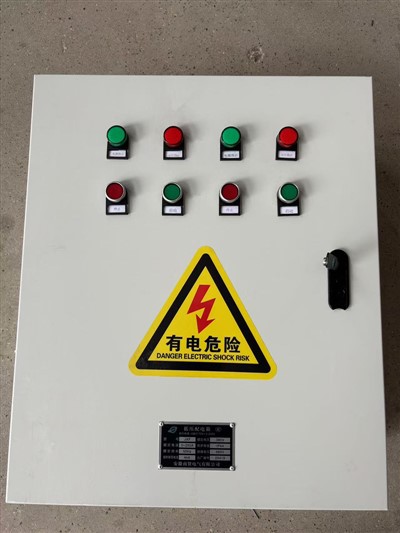
First off, let’s get one thing straight: inspecting an SDB isn’t just glancing at the outside. It’s split into two main parts—on-site checks (when you’re physically at the box) and pre-power (or post-power) tests that tell you if the inside is working right. I’ve heard people skip the pre-power stuff and that’s where mistakes happen. Let’s start with the basics before you even open the box, because safety first, always. You’d be shocked how many people forget this: turn off the main breaker feeding the SDB before touching anything inside. Even if you think it’s off, double-check it with a non-contact voltage tester—those little $20 tools are lifesavers. I keep one in my tool belt, every single job, no exceptions.
Now, the outer shell check. If the box itself is damaged, nothing inside matters. First, look at the enclosure—dents, cracks, rust. If it’s an outdoor SDB (like on a patio or a power pole), it needs to be rated for that environment. A lot of cheap imported boxes skip the IP rating (Ingress Protection, for anyone who doesn’t know the acronym) and they let water and dust in over time. I had a client once who bought a super cheap box for a retail parking lot—no IP65 rating, so after a heavy rain, water pooled on the top and seeped through a tiny crack. The circuit breakers shorted out and closed the whole store for 8 hours. So check that shell for any signs of wear, especially if it’s exposed to the elements. Also, make sure the door closes tight and the gasket around it isn’t torn. The gasket keeps moisture out, so if it’s ripped, you’re just asking for trouble down the line.
Next, let’s get inside the box. Start with the wire connections. This is the biggest issue I see on old SDBs: loose wires. When wires aren’t tightened properly at the breaker or the neutral bar, they get hot, and hot wires lead to fires. How do you check them? After turning off the main power, gently wiggle each wire—if it moves more than a tiny bit, it’s too loose. Use a torque screwdriver to tighten them to the manufacturer’s specs. For most 12-gauge wires, that’s around 15 lb-in, 10-gauge is 25 lb-in, but don’t guess—check the SDB’s manual (if you didn’t get one when you bought it, reach out to us, we have copies for all our boxes). Also, make sure you’re not stripping too much insulation off the wire when you connect it. If bare copper is sticking out beyond the screw, that’s a shock hazard, and it can cause a short between two terminals. I always tell my team to leave about ¼ inch of exposed wire, no more.
While you’re looking at the wires, check the neutral and ground bars too. The neutral bar carries the return current, and the ground bar is there for safety if something shorts. Make sure they’re not overcrowded—every connection should have its own screw, no piling wires into one hole. Overcrowding is another top cause of overheating. I’ve seen SDBs where someone tried to fit 5 wires into a single neutral slot—no wonder it burned up. Also, check that the ground wire is the right size. For a 100-amp SDB, the ground wire should be at least 6-gauge; if it’s smaller than that, it’s not going to do its job if there’s a fault.
Now, the circuit breakers themselves. Each breaker should be labeled clearly, right? Like “Kitchen Circuits” or “Outlets” or “HVAC unit.” If the labels are faded or missing, it’s way harder to figure out which breaker controls what when there’s an outage. Take an extra 5 minutes to re-label them if you have to—cheap vinyl labels from a hardware store work, or we sell custom labels that are weatherproof for outdoor boxes. Also, test each breaker to make sure it trips when it’s supposed to. Here’s how: with the main power off, switch each breaker to “On,” then manually flip the trip lever. It should snap back to “Off” easily. If it doesn’t, that breaker is bad and needs to be replaced. Don’t try to “make it work”—a breaker that won’t trip is a fire waiting to happen. I had a residential client a few years back whose breaker was stuck in the on position; their space heater overheated and burned a hole in the wall before anyone noticed.
Wait, what about the main breaker? That’s the big one at the top of the SDB, right? It controls all the power going into the box. Test the main breaker the same way—manually trip it, make sure it doesn’t stick. Also, check the rating on the breaker and the SDB itself. If the box is rated for 100 amps, you can’t put a 150-amp breaker in there. That’s a huge code violation, and it’s dangerous. A lot of shady contractors will cut corners on this, but we never sell SDBs with higher amp ratings than they’re supposed to handle, and we always include a label on the door showing the maximum amp load.
Now, let’s talk about something a lot of people skip when inspecting: the space around the SDB itself. You don’t want a box crammed into a corner with no room to open the door or work inside. The NEC (National Electrical Code, the standard we all follow in the U.S., though other countries have their own rules) says you need at least 3 feet of clear space in front of the SDB, and enough room to open the door 90 degrees. If it’s stuffed next to a shelf or a water heater, you can’t get in to do inspections or repairs, which defeats the whole purpose. Also, make sure the box is mounted level. If it’s tilted, water can pool on the top, or wires might come loose over time. I once had a client who mounted an SDB under a porch at a slight angle—after a year, rain water didn’t drain off, and it got inside the box. Luckily we caught it during an inspection before there was a fire.
What about modern SDB features? A lot of newer boxes have GFCI (Ground Fault Circuit Interrupter) or AFCI (Arc Fault Circuit Interrupter) breakers, which are mandatory in a lot of areas now. If your box has these, you need to test them properly too. For GFCI, there’s a little test button on the breaker—press it, and the breaker should trip, cutting power. Press the reset button, and it should turn back on. If it doesn’t trip when you press test, it’s bad. For AFCI, that’s a little trickier—you can’t just press a test button, usually you have to use a special AFCI tester, or test it by plugging in a device that draws a small arc (though be careful with that, better to use a tester if you’re not sure). These breakers stop fires from small arcs that regular breakers don’t catch, so making sure they work is non-negotiable.
I get asked all the time how often you should inspect an SDB. For residential boxes, every 5 years is a good rule, though if it’s an outdoor box in a super humid or dusty area, every 3 years. For commercial or industrial boxes, every 2 years, because they handle way more power. If you notice flickering lights, breakers that trip for no reason, or a burning smell near the box, don’t wait—inspect it right away, or call a pro. I’ve had clients wait months after smelling something, and by then the damage was done.
Wait, one more thing: documentation. When we supply an SDB to a client, we give them a full set of specs, wiring diagrams, and maintenance notes. If you’re inspecting an old box that doesn’t have that, take a few minutes to write down what you find—wire sizes, breaker ratings, any loose connections. That way, next time you inspect, you can compare and spot changes over time. A lot of people think inspections are just checking now, but tracking changes is how you catch small problems before they get big.
Let me wrap this up like I always do for my clients at the end of a job. Inspecting an SDB isn’t rocket science, but it’s not something you can half-ass either. The biggest mistakes I see are skipping safety steps, ignoring loose wires, and not checking the box’s environment. If you take 2 hours to do a full inspection, or have a professional (like our team) do it, you’ll avoid so many headaches—outages, fires, expensive repairs.
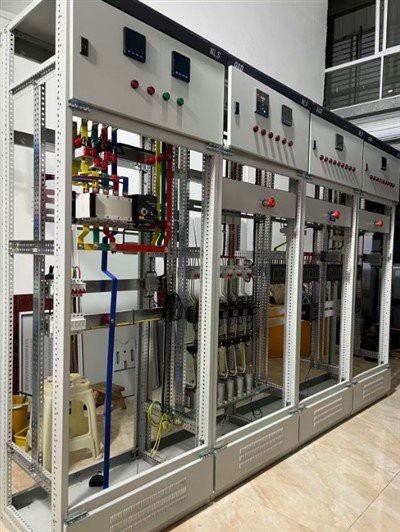
If you need help with SDB inspections, have questions about maintaining your current box, or are looking to upgrade to a new, safe, high-quality SDB, hit us up to connect for a procurement chat. We’ve been in this business long enough to know exactly what works, and we’re here to make sure your power setup is safe and reliable, no cut corners.
Distribution Cabinet References
National Electrical Code (NEC) Article 230 for secondary distribution box requirements
Underwriters Laboratories (UL) Standard 67 for safety of electrical enclosures
International Electrotechnical Commission (IEC) 60439 for low-voltage switchgear and controlgear assemblies
Anhui Nanxian Electric Co., Ltd.
With abundant experience, we are one of the most professional secondary distribution box manufacturers and suppliers in China. We warmly welcome you to buy advanced secondary distribution box for sale here and get quotation from our factory. All customized products are with high quality and low price.
Address: Factory Unit 03-2, Building 21, Feidong Yinfeng Industrial Park Co., Ltd., Northeast Corner of Manquan Road and Changle Road, Hefei Circular Economy Demonstration Park, Feidong County, Hefei City, Anhui Province.
E-mail: 541580567@qq.com
WebSite: https://www.nxelepower.com/
